DIY Troubleshooting Before Calling AC Repair in Fayetteville
Most summers in Fayetteville feel like someone left the oven door open. When your air conditioner fails, discomfort is immediate and decisions matter. You can save time, money, and unnecessary service calls by running a quick set of checks at home. I’ve spent years fixing systems and training homeowners to spot simple issues, and over that time I’ve seen patterns: half the calls could have been solved with a screwdriver and a little patience, another quarter were preventable if filters had been changed, and the rest required a technician with gauges and experience. This guide walks you through sensible, safe troubleshooting so you call AC repair in Fayetteville only when the issue truly needs professional attention.
Why do this before you call? Because a confident, detailed description of what you found helps the technician diagnose faster, and because some fixes cost nothing but time. It also reduces the chance you pay a diagnostic fee for something you could resolve in ten minutes. I’ll show you what to check, what https://storage.googleapis.com/ac-repair-in-fayetteville/hvac-contractor/guide-to-smart-thermostats-for-fayetteville-hvac-systems.html tools to have, what to never touch, and the red flags that mean you should stop and call a pro.
First five-minute triage: what to look for immediately When the AC isn’t cooling, start with a quick inspection. These observations tell a lot and are safe to do without special training. As you walk through, keep an eye on sounds, smells, airflow, and the thermostat display.
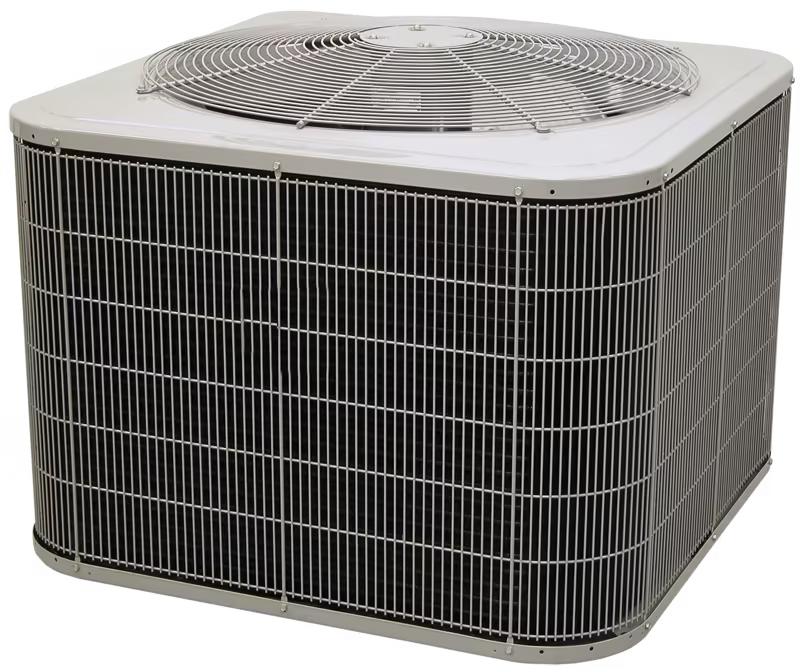
If the unit is off entirely, check the thermostat batteries and power settings. If the air feels warm, place a thermometer in the supply vent and another in the return. If the supply vent is only a few degrees cooler than return, there is an imbalance worth investigating. If the outdoor unit is not running but the indoor fan is, that points to an outdoor electrical or compressor problem. Take notes: exact temperatures, noises, whether the compressor runs, and whether the outdoor fan spins. These details are the most useful thing to tell an AC repair in Fayetteville technician.
Safety first: what not to do An HVAC system contains high-voltage electricity and pressurized refrigerant. Avoid opening panels that expose wiring or capacitor terminals if you are not comfortable. Never attempt to add refrigerant yourself unless you are certified; modern systems require specific refrigerant types and precise charge amounts. Do not bypass safety switches or tamper with the control board. If you smell burning, shut the power off at the breaker and call for service.
Tools and supplies worth having on hand You don’t need a tool chest to troubleshoot, but a few items make basic checks accurate and efficient: a small flashlight, a non-contact voltage tester if you can get one, a flathead and Phillips screwdriver, a replacement thermostat battery, a basic infrared or digital thermometer, and a work glove. A magnetic notepad to jot down readings or take a quick photo of the thermostat wiring helps when you call for help.
A short checklist to run quickly (about 10 minutes)
- Thermostat and batteries: confirm set to cool, temperature set below room temp, and replace batteries if display is dim.
- Breakers and disconnects: check the circuit breaker for the outdoor unit and the service disconnect near the condenser. Reset if tripped.
- Filters and airflow: inspect the return filter, replace if dirty, and ensure supply vents are open and not blocked.
- Outdoor unit clearances: remove leaves, grass, and debris around the condenser, and check the fan for obvious obstructions.
- Condensate drain: look for backing or water at the indoor unit; a clogged drain can trip safety switches.
Common problems you can fix at home Dirty air filters show up every summer. A clogged filter restricts airflow, lowers system efficiency, and can cause the evaporator coil to freeze. Replace disposable filters every 1 to 3 months during heavy use, or clean reusable filters according to the manufacturer. If the blower runs but cooling is weak, a new filter is often the cheapest fix.
Thermostat errors are another frequent culprit. A thermostat set to "fan on" will circulate warm air when the compressor isn’t running. Misplaced smart thermostats that are influenced by sunlight or heat sources can read the room temperature incorrectly. Swap the thermostat to "auto" and move it away from lamps or windows if readings look odd. Replacing thermostat batteries costs a few dollars and resolves many no-display or intermittent-cycling complaints.
Tripped breakers or blown fuses are simple to check. The outdoor condenser usually has its own breaker in the main panel and a fused disconnect at the unit. If the breaker trips immediately after resetting, or a fuse blows again, stop and call AC repair in Fayetteville. Repeated trips indicate a short or a failing motor, which requires professional diagnosis.
The condensate drain line can clog with algae or debris, causing water to back up and trigger a float switch that shuts the system down. You can locate the drain near the air handler and try to clear soft clogs with a wet-dry vacuum on the drain access or pour a cup of white vinegar down the drain to discourage algae formation. If water is pooling or the drain is blocked solid, call a technician.
When the outdoor unit runs but the house stays warm This scenario is frustrating and common. First, confirm the outdoor fan is spinning and the compressor sounds like it is running. If the fan runs but the compressor is quiet, the compressor may not be starting. If both run yet cooling is poor, check for an ice coating on the refrigerant lines or evaporator coil. Ice indicates low refrigerant charge or severely restricted airflow; either way, shut the system down for a couple of hours to allow the ice to melt, change the air filter, and then restart. If ice returns within an hour, contact AC repair in Fayetteville because the system will need a proper pressure check and possibly a refrigerant recharge.
If the system runs long cycles and never reaches set temperature, look at the outdoor unit’s coil. Outdoor coils clogged with dirt can reduce heat transfer by 20 to 40 percent. Gently hose off surface debris while the power is off, but do not use a pressure washer. Straighten a few bent fins with a fin comb if you have one, but leave major coil work to pros.
Strange noises and what they usually mean Rattles and buzzes often indicate loose panels or debris. Tighten screws and clear vegetation, then listen again. A squeal from the blower typically means a worn belt or bearing, and a humming sound from the outdoor unit with no compressor movement suggests a bad start capacitor. A loud clunk at shutdown can be a failing contactor. Capacitors and contactors are live electrical components; if you suspect them, shut power and call AC repair in Fayetteville unless you have the training and lockout equipment.
Smells that require attention A musty odor often points to mold in the vapor drain pan or on the evaporator coil. Clean visible mold with a mixture of water and mild detergent and keep the drain clear. A rotten egg smell indicates a gas leak and requires immediate evacuation and utility contact. A burning smell usually means electrical trouble, so turn off the system and call a professional.
When to stop troubleshooting and call AC repair in Fayetteville If any of the following occur, stop further DIY attempts and schedule service. Attempting complex repairs can make a small problem worse and void warranties.
- Persistent compressor issues: the outdoor compressor will not start, cycles on and off rapidly, or runs but delivers no cooling.
- Refrigerant concerns: evidence of ice on coils, or the system has lost performance after a line repair or long time without maintenance. Handling refrigerant is regulated and requires certification.
- Electrical faults: repeated tripped breakers, burning smells, or visible scorch marks on control boards or wiring.
- Mechanical failure: seized fan motor, broken blower wheel, or damaged compressor components.
- Complex diagnostics: intermittent faults that only appear under certain loads or temperatures, which require gauge sets and electrical testing.
When you do call, give the technician the facts you collected: thermostat set point, indoor and supply vent temperatures, breaker behavior, whether the compressor runs, and any noises or smells. A detailed account often shortens the on-site diagnostic time.
Preventive maintenance that actually pays off The most reliable way to avoid emergency calls is regular maintenance. An annual tune-up, ideally in spring before heavy use, catches worn parts, checks refrigerant levels, cleans coils, and verifies controls. A typical maintenance visit pays for itself by improving efficiency 10 to 20 percent and extending equipment life by several years. If you own a system older than 10 years, consider budgeting 5 to 10 percent of the unit’s replacement cost annually for maintenance and minor repairs.
Simple habits extend life too. Replace filters regularly, keep at least two feet of clearance around the outdoor unit, trim vegetation that shades the condenser, and set the thermostat to a reasonable schedule instead of dramatic swings. For homes with pets or high dust loads, check filters monthly during heavy use. If you have a programmable or smart thermostat, program modest setbacks rather than extreme changes to avoid unnecessary wear from rapid temperature swings.
What a good AC repair in Fayetteville will do on the first visit A competent technician will start by confirming your symptoms, then perform a visual inspection and measure temperatures and pressures. Expect checks of electrical connections, capacitor and contactor health, refrigerant charge (if accessible), condensate drain, and airflow. They should explain findings, show you any obvious issues, and provide options: repair, replace components, or recommend a replacement. Make sure they offer a written estimate and explain any warranty implications. If a contractor suggests a full replacement immediately without diagnostics, ask for data: refrigerant pressure readings, compressor amp draw, and a clear explanation for replacement.
Costs and what to expect Diagnostic fees vary, typically between around $75 to $125 locally, though emergency or after-hours calls cost more. Simple repairs like a capacitor or contactor replacement often land between $150 and $450, depending on part quality and labor. Refrigerant recharges can be costly because costs depend on the refrigerant type and amount needed, and some refrigerants are more expensive due to regulation. Replacement costs for a whole system depend on unit size, efficiency, and installation complexity, often ranging from several thousand dollars upward. Get multiple estimates for major work, and balance upfront price against warranties and the contractor’s reputation.
Edge cases and tricky failures to watch for A common tricky scenario is intermittent cooling only during the hottest part of the day. That can signal a weak compressor that heats up and trips on internal protection. Another is uneven cooling between rooms, which often ties back to ductwork imbalance, blocked returns, or undersized equipment. Old homes can hide undersized returns or collapsed ducts. A qualified contractor will measure airflow and may recommend duct sealing or adding returns.
If a system has had repeated charge top-offs, suspect a leak. Refrigerant leaks damage the environment and the compressor over time. Modern refrigerants and hardware are less tolerant of patches; a proper repair requires locating the leak and fixing it. Be wary of contractors who simply add refrigerant as a long-term solution.
How to choose a technician in Fayetteville Look for local companies with a physical address, positive recent reviews, and licensed technicians. Ask if technicians are NATE certified or equivalent, and whether they carry liability and workers comp insurance. Request references for similar work and ask about guarantees on repairs and labor. A reliable company will not pressure you into immediate replacement and will show data supporting recommendations.
Final thoughts A little knowledge goes a long way. In Fayetteville heat, a quick filter change, thermostat check, and clearing the outdoor unit often solves common failures. When the problem lies beyond that, the right facts and measurements will save you time and money with a service call. Treat basic troubleshooting as triage, not repair; use it to identify likely causes and rule out safe, cheap fixes. Then call AC repair in Fayetteville with precise information so the technician can focus on the real problem and get your home comfortable again.
If you want, tell me exactly what your system is doing right now, the make and model if visible, and any readings you took. I can help prioritize the next steps and advise whether this looks like something you can safely handle or if you should schedule a technician.
A/C Man Heating and Air
1318 Fort Bragg Rd, Fayetteville, NC 28305
+1 (910) 797-4287
[email protected]
Website: https://fayettevillehvac.com/